
Population Statistics
Total Population ('25)
34.2
million people
Population Growth ('25)
0.5
percent
Median Age ('24)
31
years
Total Fertility Rate ('25)
1.5
per 1,000
LIfe Expectancy ('25)
75.3
years
Total Register Marriages ('24)
190,304
people
Total Divorces ('24)
60,454
people
Average Age at Marriage (Male) ('24)
31.2
years
Average Age at Marriage (Female) ('24)
29.1
years
Average Household Size ('20)
3.8
people
Number of Birth ('25)
396,175
people
Number of Death ('25)
199,807
people
Infant Mortality ('25)
7.0
per 1,000
Maternal Mortility Ratio ('25)
20.4
per 100,000
1 / 3
Population
Source: DOSM,2025
Population Aged 65+
2,750
('000) people
Population Aged 15-64
24,246
('000) people
Population Aged 0-14
7,481
('000) people
Family
Source: DOSM,2025
Total Household
9.1
million
Averages Household
3.8
people
Female Headed Households
20.1
percent
Malaysian Family Well-Being Index
7.93
maximum scale of 10
Reproductive
Source: LPPKN,2026
Contraceptive Prevalence
52.2
percent
Unmet Need
26.7
percent
LPPKN Subfertility Clinic
4
clinics
Nur Sejahtera Clinic
50
clinics
Programme
Source: LPPKN,2026
BuAi IUI Programme
1,658
participants
SMARTSTART 2.0
289
participants
HPV DNA Screening
18,173
sessions
Mammogram
19,238
sessions
Item 1 of 3
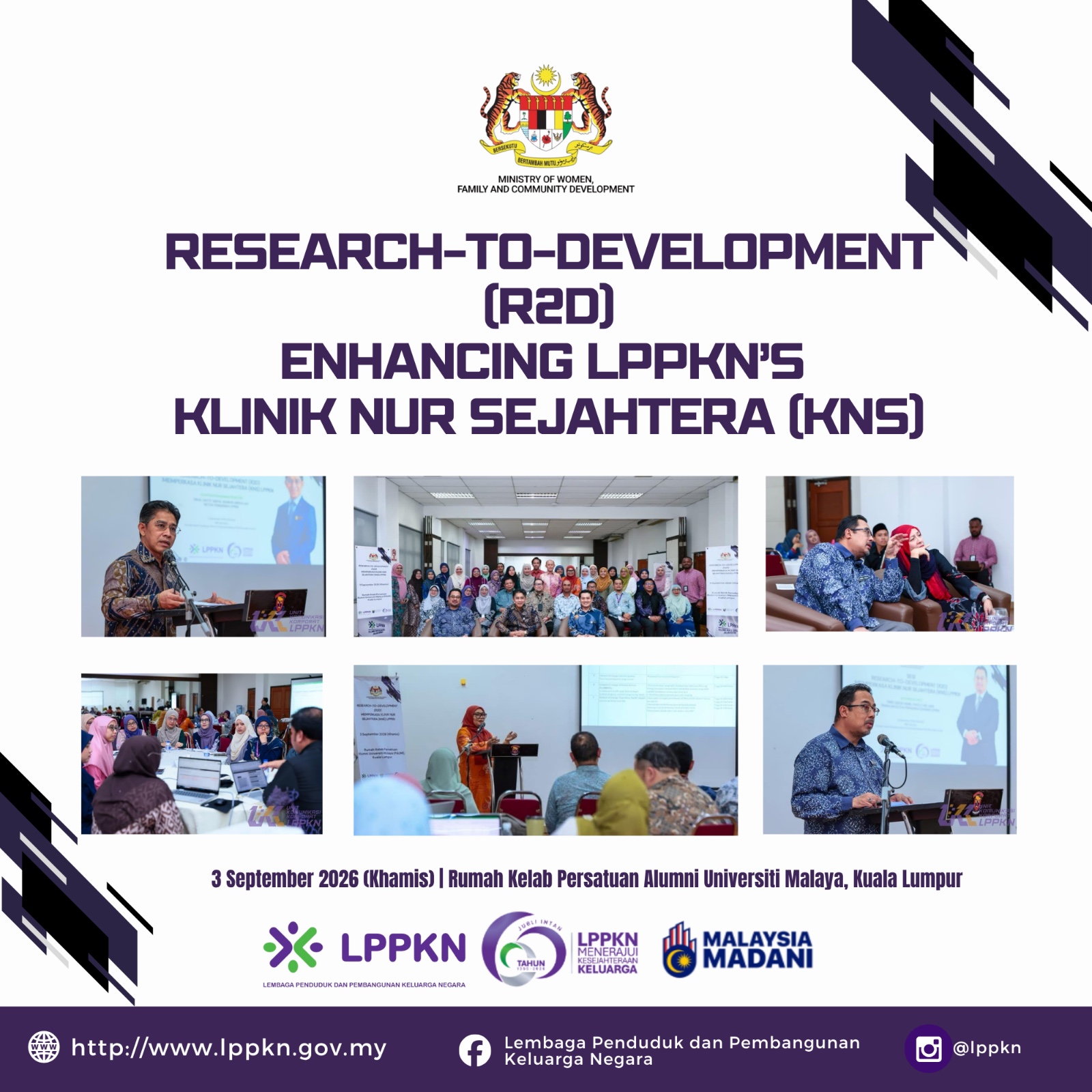
Research-to-Development (R2D) Enhancing LPPKN’s Klinik Nur Sejahtera (KNS)
LPPKN bridges research and practice to enhance Klinik Nur Sejahtera (KNS), ensuring its services remain relevant, responsive and people-centred.
Item 1 of 3
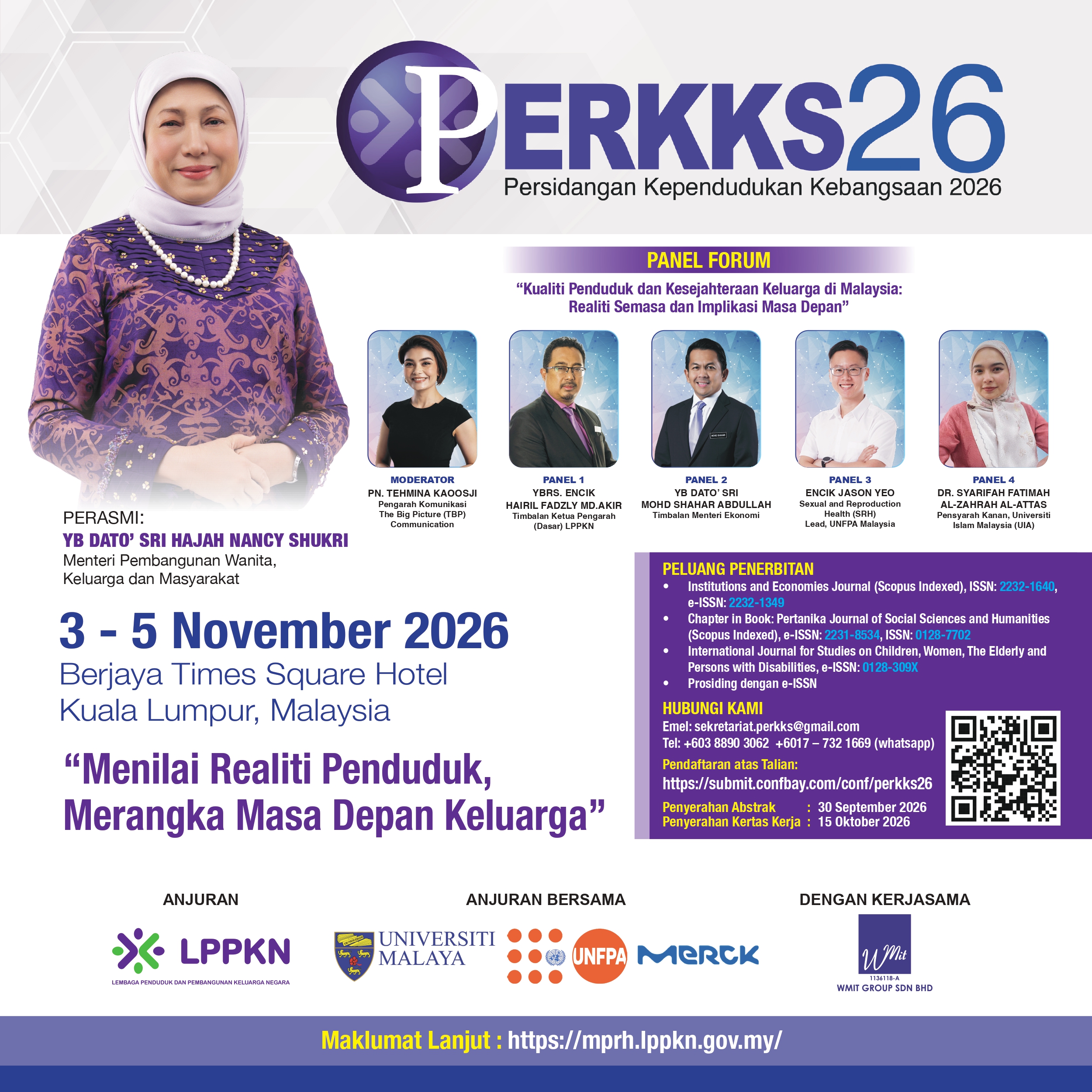
Persidangan Kependudukan Kebangsaan 2026 (PERKKS26)
Terokai isu kependudukan dan keluarga, bentangkan hasil penyelidikan anda serta rebut peluang penerbitan dalam jurnal berindeks Scopus di PERKKS26.
Item 1 of 3
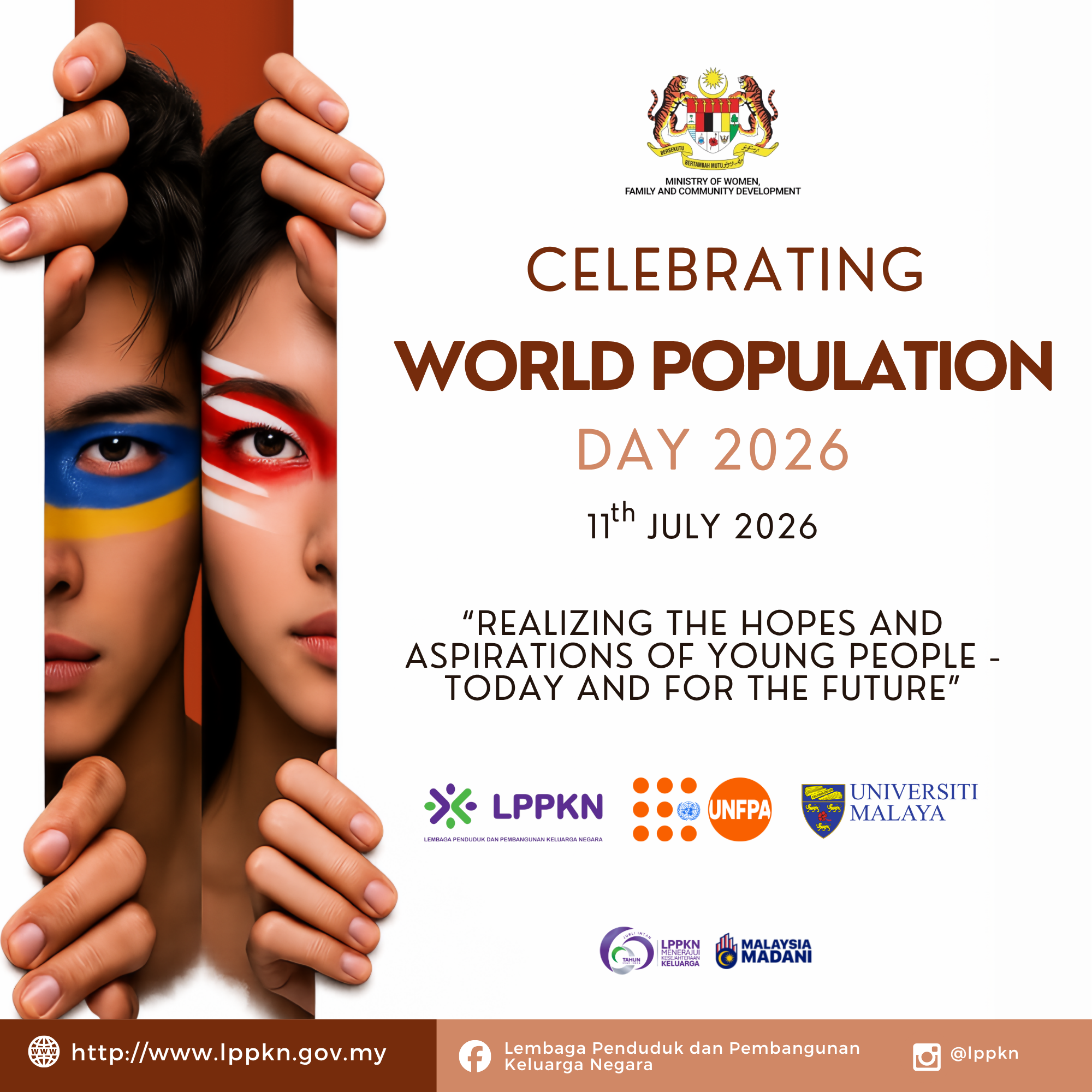
World Population Day 2026
Mark World Population Day 2026 on 11th July, by exploring Building Families of the Future: Realities, Hopes and Intergenerational Perspectives.
Item 1 of 3
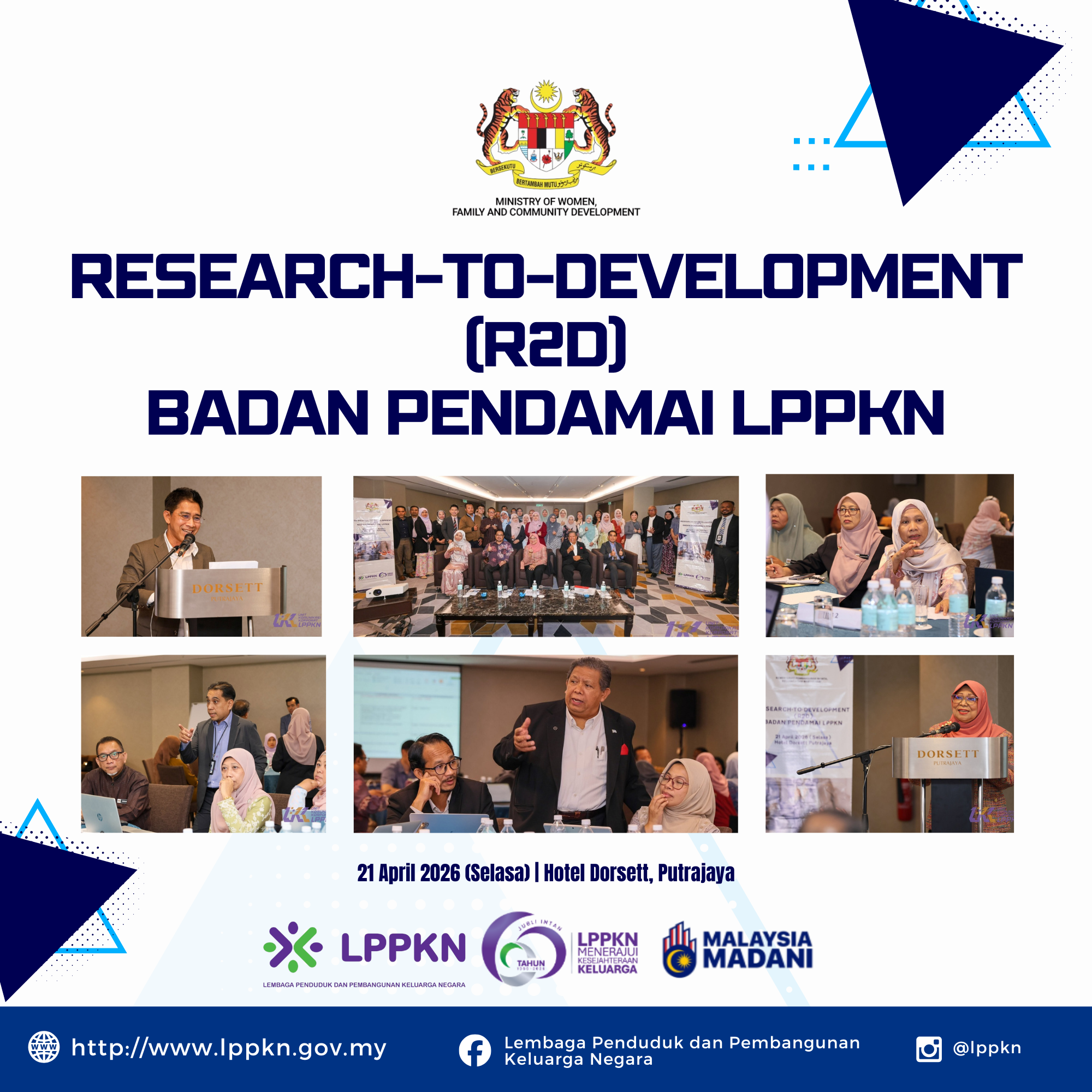
Research-to-Development (R2D) Badan Pendamai LPPKN
Daripada penyelidikan kepada tindakan. Ketahui bagaimana R2D memperkukuh Badan Pendamai LPPKN dan intervensi keluarga.
Research Focus Areas
Adolescent
Studies youth aspirations, relationships, education, digital behaviour and future family formation to inform targeted adolescent development programmes.
Ageing
Analyses population ageing, older persons’ well-being, care needs and policy responses for an inclusive and age-ready Malaysia.
Demography
Examines demographic trends, fertility decline, migration, urbanisation and population structure to guide sustainable national and state development planning.
Family
Focuses on family well-being, marriage, parenting, intergenerational support and
household dynamics in a rapidly changing social environment.